
Architecture Decision Record (ADR)
Why it matters? How to self-assess, elevate adoption level with some best practices?
What’s an ADR
An Architecture Decision Record (ADR) is a document that captures a significant architectural choice, the context behind it, and the reasoning for the final decision. Decisions are captured, reviewed in timely manner with appropriate visibility. It creates a clear, lasting record so future teams understand why the architecture evolved the way it did.
Why ADRs are important
Architecture Decision Records (ADRs) capture the “why” behind key architectural choices, making system reasoning transparent. They help teams align, onboard faster, and avoid repeating past debates. ADRs also provide a historical trail that supports future maintenance and informed change. It also eliminates silos, asking same questions in the future because previous decisions and rationals were not documented enough (including by those who are no longer in the same role or left organisation)
ADRs adoption model dimensions
Not every enterprises stand at the same level when we consider ADRs as an embeded culture.
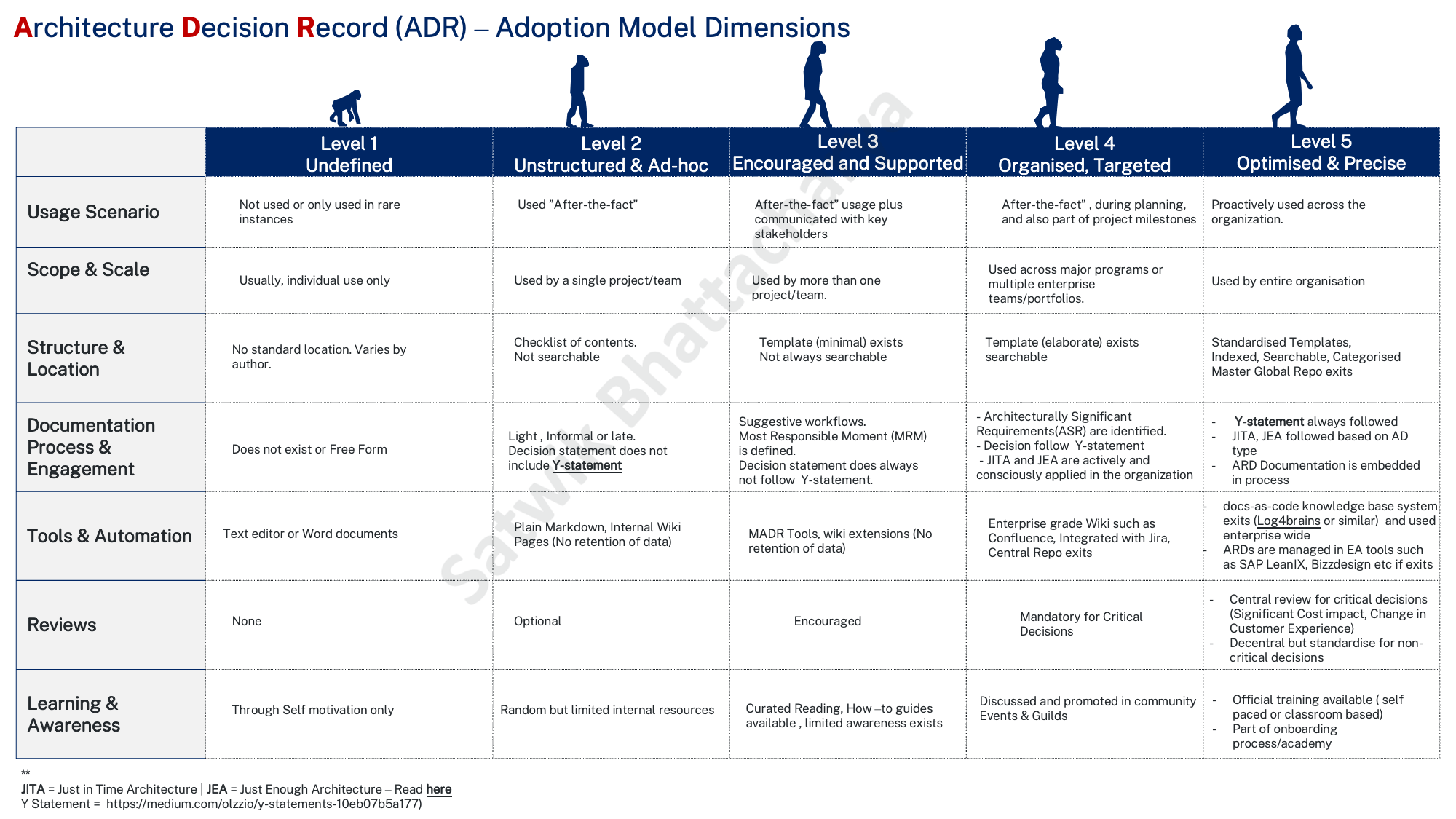
Inspired by the article published by Olaf Zimmermann and Mohsen Anvari , below table is prepared which can help enterprise (or its divisions) to self examine adoption stage for all dimensions and what would take to elevate the adoption level so that enterprise has consistent view of architecturally insignificant and significant decisions were made along with the rational, tradeoffs , options considered during most decisions – especially significant ones.
Below diagram shows seven major dimensions with each dimension have five levels.
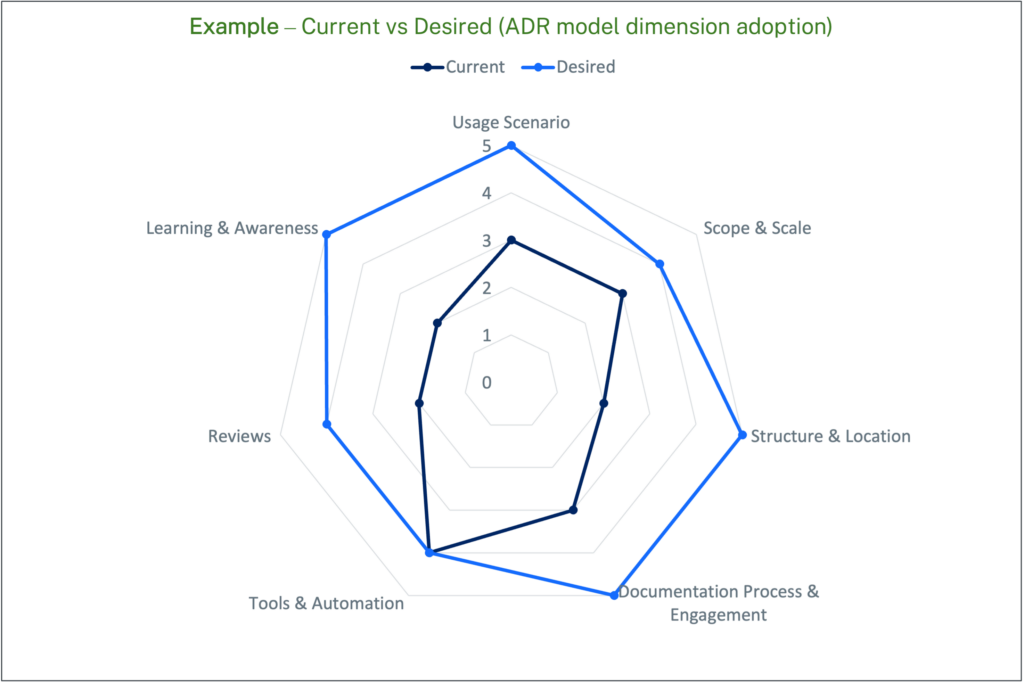
A good way to start to understand current vs desired adoption level to use spider web chart (can be done easily with excel). An example is shown below.
Conclusion
With this post, I intend to provide a starting point for organisations to assess how architectural choices are documented and later referenced for thorough understanding of historical context and trade-offs considered. Not all organisations need to be at a higher level in all dimensions – it’s up to the immediate appetite and long-term goal to embed this crucial practice within the entire organisation or a specific department.